Thursday, October 15, 2020

HAPPY TEACHER'S DAY!

"TO SIR WITH LOVE"
GLEE


GLEE: THE MUSIC, JOURNEY TO REGIONALS
℗ 2010 Twentieth Century Fox Film Corporation
Written by Mark London & Don Black for the 1967 movie of the same name
Originally performed by Lulu: https://youtu.be/_dc_8bDJHE4
℗ 1967 Parlophone Records Ltd.

Those schoolgirl days of telling tales and biting nails are gone
But in my mind I know they will still live on and on
But how do you thank someone who has taken you from crayons to perfume?
Oh, it isn't easy, but I'll try

If you wanted the sky I would write across the sky in letters
That would soar a thousand feet high 
'To Sir, with love'

The time has come for closing books and long last looks must end
And as I leave I know that I am leaving my best friend
A friend who taught me right from wrong and weak from strong
That's a lot to learn
What can I give you in return?

If you wanted the moon I would try to make a start
But I would rather you let me give my heart 
'To Sir, with love'

HOW TO LEARN ENGLISH GRAMMAR

Studying Grammar on the "Paragraph" and “Narrative” Levels


by WikiHow


1. Learn about paragraph structure. A basic paragraph consists of three to seven sentences. Each paragraph must have a topic sentence, supporting sentences, and a concluding sentence.
  • The topic sentence is usually the first sentence in the paragraph. It is the most general sentence and introduces the idea you plan to discuss throughout the rest of the paragraph.
    • Example: English grammar is a complex topic that covers a range of information.
  • The supporting sentences explain the idea presented in the topic sentence with greater detail.
    • Example: English grammar is a complex topic that covers a range of information. At the "word" level, one must learn about parts of speech. At the "sentence" level, topics like sentence structure, subject/verb agreement, and clauses must be explored. The rules governing punctuation use are also a part of "sentence" level grammar. Once a person starts writing larger piece, he or she must also learn about paragraph structure and organization.
  • The concluding sentence summarizes the information presented in the paragraph. It is not always necessary, but you should still know how to write one.
    • Example: English grammar is a complex topic that covers a range of information. At the "word" level, one must learn about parts of speech. At the "sentence" level, topics like sentence structure, subject/verb agreement, and clauses must be explored. The rules governing punctuation use are also a part of "sentence" level grammar. Once a person starts writing larger piece, he or she must also learn about paragraph structure and organization. All of these rules define and describe how to write English correctly.
  • Also note that the first sentence of a paragraph should be indented a few spaces to the right of the paragraph's left edge.
2. Vary sentences within a paragraph. While you could technically have a paragraph that uses nothing but basic sentences, a better and more grammatically pleasing paragraph will have a variety of simple and complex sentences.
  • Correct example: I love my cat. He has soft, orange fur. On cold days, he likes to cuddle next to me for warmth. I think that my cat is the greatest cat ever, and I am really happy to have him.
  • Incorrect example: *I love my cat. He is orange. His fur is soft. He cuddles next to me on cold days. My cat is the greatest cat. I am really happy to have him.*
3. Organize longer pieces. After you feel comfortable with your paragraph writing skills, try writing longer works, like academic essays. Essay writing is a separate subject, so you should study about it in greater detail. There are a few things you should keep in mind as you begin, though.
  • Organize your essay by writing an introductory paragraph, three or more body paragraphs, and a concluding paragraph.
  • The introductory paragraph must be a general paragraph that presents the main idea without providing detail. The supporting paragraphs must expand on this main idea with greater detail, and each paragraph should cover its own separate point. The concluding paragraph restates and summarizes the information presented in the essay and does not introduce any new information.
Source: https://www.wikihow.com/Learn-English-Grammar. Accessed on October 15, 2020.

ENGLISH WITH FUN

PRESENT PERFECT: aprenda a usar
Aula 07 - English in Brazil


Hora de aprender, com a professora Carina Fragozo e "suas personagens", o present perfect, esse tempo verbal da Língua Inglesa que não possui um correspondente direto com as formas de passado do Português. Atenção para a estrutura (have / has + past participle) e para as formas afirmativa, negativa e interrogativa. Confiram! 😉


Cliquem AQUI para fazer o download do livro Past, Present and Future: Guia de Tempos Verbais do Inglês. 😍

U.S. CULTURE AND TEENAGERS

AMERICAN TEENS TALK!


Americans Teens Talk! is a collection of interviews of American high school students in both written and audio format. Each interview is accompanied by vocabulary notes and discussion questions.
The interviews in American Teens Talk! give learners a view into the lives of adolescents in the U.S. Through the written and audio format of the interviews, learners are able to increase their vocabulary, practice their reading and listening skills, engage in discussions, and learn more about U.S. culture. 


CLICK HERE for downloading the entire book.
CLICK HERE for downloading the chapters and MP3 (see "table of contents" section).

Wednesday, October 14, 2020

CHATCLASS

Principais dúvidas sobre a Olimpíada de Inglês (Parte 2)


Confiram a live realizada hoje, 14/10, sobre a Olimpíada de Inglês 2020. Há esclarecimentos importantes, incluindo sobre a inscrição de professores na competição.

HOW TO LEARN ENGLISH GRAMMAR

Studying Grammar on the "Sentence" Level


by WikiHow


1. Learn how to structure a basic sentence. At minimum, every sentence consists of a subject and an action. A sentence that lacks either one is a sentence fragment and is considered to be improper.
  • The subject is usually a noun or pronoun, and the action is conveyed using a verb.
  • Correct example: The dog ran.
    • Note that the subject is indicated in italics and the action is indicated in bold print.
  • Incorrect example: Yesterday afternoon.
  • Expand your sentences into more complex forms after mastering this basic format.
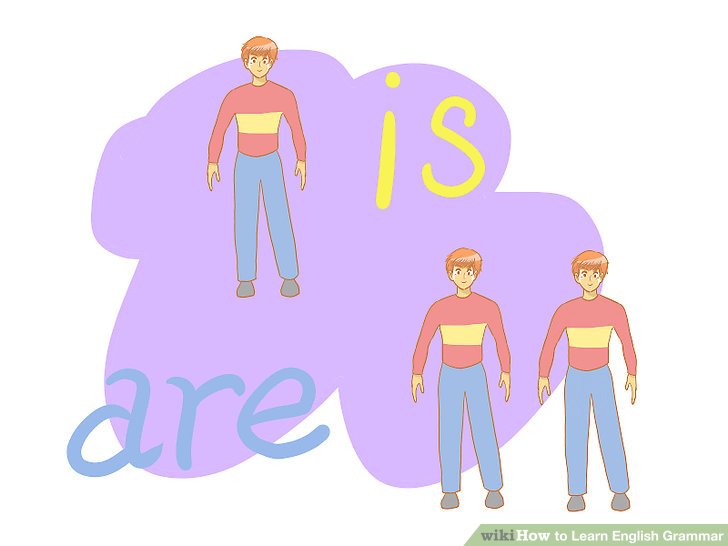
2. Maintain correct subject/verb agreement. Within a sentence, both the subject and verb must share the same singular/plural state. You cannot use the singular form of a verb with a plural subject; a plural subject must have a plural verb.
  • Correct example: They are at school.
  • Incorrect example: *They is at school.*
  • When two singular subjects are connected with the word "and" (he and his brother), the subject becomes plural. When connected by "or" or "nor" (he or his brother), the subject is singular.
  • Collective nouns, like "family" or "team," are treated as singular nouns and require a singular verb.
3. Form compound sentences. Compound sentences are the easiest sentence form to master after the basic sentence. Use a conjunction to join two related thoughts into one sentence rather than forming two separate sentences.
  • Instead of: The dog ran. He was fast.
    • Use: The dog ran and he was fast.
  • Instead of: We looked for the missing book. We could not find it.
    • Use: We looked for the missing book but could not find it.
4. Practice using conditional phrases. A conditional sentence describes a situation in which one part of the sentence is true only if the other part is true. They can also be referred to as "if, then" statements, but the word "then" will not always appear when the sentence is written.
  • Example: If you ask your mother, then she will take you to the store.
    • Note, however, that it would also be correct to write: If you ask your mother, she will take you to the store.
    • Both forms are still conditional.
5. Understand how to use clauses. Use clauses to form complex sentences. Clauses are the "building blocks" that can be used to expand a sentence past its basic form. They can either be independent or dependent.
  • An independent clause has its own subject and verb. As a result, it could stand as its own sentence. Note that compound sentences, as mentioned previously, consist of independent clauses.
    • Example: She felt sad, but her friends cheered her up.
    • Both "she felt sad" and "her friends cheered her up" could stand as separate sentences.
  • A dependent clause is one that could not stand as its own sentence.
    • Example: While he agreed with his brother, the boy would not admit to it.
    • The clause "While he agreed with his brother" would not make sense a separate sentence, so it is a dependent clause.
6. Manage punctuation. There are multiple punctuation marks and various rules governing their usage. You should study these rules in detail, but first, you need a basic understanding of how each punctuation mark is used.
  • Periods (.) mark the end of a statement sentence.
  • Ellipses (...) indicate that a portion of text has been removed from the passage.
  • Commas (,) separate words or word groups when a pause is necessary but a period is inappropriate.
  • Semicolons (;) should be used in complex sentences that lack a connecting conjunction.
  • Colons (:) are used to introduce lists within a sentence.
  • Question marks (?) are used at the end of a sentence when the sentence asks a question.
  • Exclamation points (!) are used at the end of a statement sentence to indicate surprise or emphasis.
  • Quotation marks (") separate words spoken by another person from the rest of the text.
  • Parentheses () enclose information that clarifies a preceding thought.
  • Apostrophes (') separate contractions and show possession.

Source: https://www.wikihow.com/Learn-English-Grammar. Accessed on October 14, 2020.

Tuesday, October 13, 2020

ENGLISH GRAMMAR WITH FUN

SIMPLE PAST: o passado em inglês (DID)
Aula 06 - English in Brazil


Nesta divertida aula da professora Carina Fragozo, fomos "transportados" para os anos 80 e para a pré-história para aprender a falar sobre o passado em Língua Inglesa, usando o Past Simple. Momento para compreender a utilização dos auxiliares did / didn't e entender os verbos regulares e os verbos irregulares. Aula importante para conseguir acompanhar a próxima sobre o Present Perfect. 😉

Reading and listening

TEXTO BÁSICO PARA PRATICAR “THE KIND WAITRESS” ENGLISH AUDIO Vamos conhecer Bill, um senhor de 82 anos que tem o hábito de jantar todas as n...